

Since scripted television’s inception, the family unit has been a creative fixture of cable and network programming. In fact, if you were asked to rattle off a list of ten fictional TV families, you’d probably be able to do so with ease. However, the problem is an overwhelming majority of family structures, especially modern motherhood, depicted on TV do not reflect today’s lived experiences.
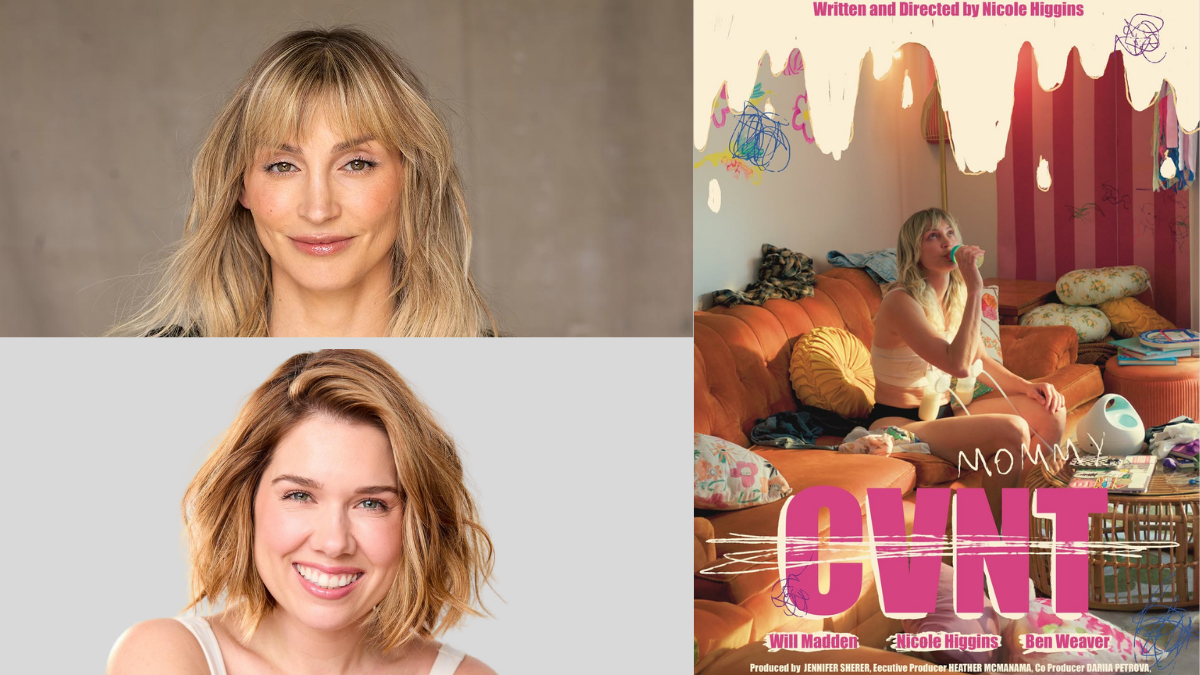
Director, writer, and actor Nicole Higgins and producer Jennifer Sherer’s new series, CVNT, is chipping away at the polished portrayal of motherhood to expose the raw reality. Inspired by Higgins’ own motherhood experience and battle with addiction, CVNT, which is slated to premiere at the 2026 Tribeca Film Festival, follows Marnie, a newly sober single first-time mom. Marnie will go up against everything, including addiction, rising cost of living, and cuts to social services, so long as her baby girl’s life stays intact.
Ahead of the series’ world premiere at the 2026 Tribeca Film Festival, I caught up with Nicole and Jennifer to discuss their series. During our conversation, we discussed the realities of motherhood, how a rejection from Slayyyter turned out to be a blessing in disguise, how they leverage comedy in dark times, and their favorite television moms. Read the full chat below.
Before we even get started, congratulations! Congratulations on premiering at Tribeca. This is a huge professional feat. I don’t know if you all are tired of this question at this point, but what does this moment mean to you?
Jennifer: You’d never be tired of it! It’s a dream.
Nicole: Jenny and I, funny story. We literally manifested this. We made a manifestation bowl and put it on top of $1,000 and was like, ‘Please!’
Jennifer: $1,111! On 11/11. I’m not even that woo, but I was with my woo friends and did it.
Nicole: And I would do little chants every morning of the festivals that I wanted to get into, and this was one of them. And I can’t even tell you how exciting it is and also nerve-wracking at the same time.
I mean, I can only imagine this is a huge stage for y’all. I mean, you have tons of professional experience behind the scenes, and Nicole, this is their second directorial project, but the first feature television series. So, I’m sure it’s a lot of nerves, but from what I watched, you knocked it out of park. Both of you all did a phenomenal job. So let’s start from that opening scene, right?
As soon as we and the viewers are watching, we are gut-punched. This isn’t going to be a soft story. This isn’t going to be a rose-colored glasses view of motherhood. This is going to be a very real, a very raw conversation. Can we just first talk about that shot? What was the conversation between both of you all and then, obviously, the cinematographer, Eric [Gordon], going on to sequence this scene?
Nicole: That was really tough, because I found out recently that only 2% of adults suffer from night terrors, and I’m one of those people. And I’m going to be nine years sober in July, and I still have night terrors about drug use. I still have night terrors about accidentally killing my daughter, dropping her in water and she drowns, or I leave her in the car and she’s dead.
And so that, to me, is stuff that I never hear other mothers talk about. And I don’t know if it’s because they’re not the 2% or they just don’t want to talk about that. But I felt like that was very real to me in my life and my story. And then what happens is you wake up next to your kid, and you have to carry on with your day even though you feel inside like you just want to die. You just had this terrible experience that felt so fucking real. I wanted to incorporate that realism of being a parent and being an ex-drug addict.
And am I able to take care of this life? With this past life I had? And can I do it? And am I doing it? And I’m doing it. And so that’s what I really wanted to open with because it meant a lot to me personally because that’s my experience. And then you wake up to a kid that’s like, “Mom, let’s play.” And you’re like, “Ah, okay.” And so, yeah, working with Eric we did a lot of prep work in the shot listing of what that was going to look like and how that needed to feel and how jump-cutty it needed to be.
Jennifer: There was a lot of time in the edit room, sort of refining that because we came in quite handheld with Eric. We blocked everything out, and then we really wanted to up that sort of tension and anxiety that our character and Nicole would be feeling in that moment with our edit. And so it was a really—I mean, gosh, it was like a painful thing to be living with for so long and figuring out how to make this the most impactful without feeling we didn’t want it to feel kitschy or indulgent in any way, but it’s very grounded and real and traumatic.
Thank you, Nicole, for opening up and being that honest because it’s still such a new space, especially in digital content. We see a lot of moms creating and documenting their journey through motherhood, and it’s not the story that we’re told, right? So, to include that as an introduction, I think, is very important and is an anchor that I really stuck to while I was watching it.
So, speaking of addiction and night terrors, you also have other themes in here that are very real, very present, and actively happening. Cuts to social services. Cost of living crisis. But you found a way to tastefully insert comedy. What was kind of the yes, yes, no kind of process of including comedy within the script?
Nicole: So, I am a true fan of dramedies. I love anything that takes sad, terrible moments in life and can make light of them because it’s very real to me. If I think about all the things I did as a drug addict, and I think about it now, and I’m like, “God, that’s actually funny.” If someone were to watch that back, they would be like, “What the f*ck?” And that’s hilarious. It was a fine line because I think there was a lot of jumping back and forth, and we had to kind of slim that down in the edit. If I’m not mistaken, Jenny.
Jennifer: We have to massage things, so it had a flow.
Nicole: Yeah, I really wanted to bring that in because it felt very, very real, real-life to me, of things being very dramatic and then they’re funny, and we can laugh about it.
Jennifer: I think we can all kind of look outside, so to speak, to what’s occurring in the world and utterly devastating things, both here, domestically, and abroad. And I think there’s so much pain in the reality of life, and the way that we all get through it is also with humor because if we just allowed ourselves to sit in that grief, we wouldn’t be here. And so that’s the kind of magic of the human spirit: we’re able to persevere through terrible things and find the light and find the joy within the darkness.
Nicole: My theory is that there are two kinds of audiences. There are people that like escapism completely, and then there are people that like relatable stuff. And sometimes the relatable stuff going on for an hour can be boring, right, for the people who want escapism. I wanted to kind of blend the reality with the escapism, if that makes sense. So not to please audience, but for my own…
Jennifer: Coping mechanisms.
Nicole: Yeah, my own coping mechanisms, my own getting through the trauma.
There is this growing conversation of film lovers and TV bingers saying like, “Hey, I don’t know where I fall on the scale anymore. Before, I used to want escapism to get away from everything, but now I want to stay abreast of what’s going on.” But then sometimes it’s too heavy. I think CVNT is the perfect middle ground. Yeah, you’re going to learn something, and you’re going to see something that may make you uncomfortable and have uncomfortable conversations. But we’re going to insert something hilarious in the middle of all this chaos.
Jennifer: You’re going to have fun!
Speaking of that, let’s talk about the actual discourse that’s happening within this pilot; there’s a lot of political commentary without being overly political. There’s a lot of social commentary without being overly social. But I’m curious as to when you were sitting down to hash this concept out from thought to page and then to screen, what percent of CVNT was influenced directly by what’s happening in the real world versus what was, for the most part, first- or secondhand experience?
Nicole: I wanted it to be really personal. But then, obviously, I had to add the fantastical moments of the things that I wish that I could do that I didn’t do. The dream sequence, all of that, is all personal. The drug addiction is personal. I think that’s important because a lot of people don’t pull out of it.
The Craigslist ad came to me when I was breastfeeding, and I was having a hard time breastfeeding. And I was having to constantly breastfeed to keep the milk flow going for this child. And I got curious. I was like, “What is the cost of this?” Because I had a surplus at one point.
And there are all these companies that you can sell your milk to other mothers for a dollar an ounce. And I was like, “A dollar an ounce? This is too hard for a dollar.” So, I got on Craigslist. And the first ad I saw was that one that we used, and I used it verbatim because it was so funny.
And I was just like, “This guy, is he a bodybuilder, or does he want to get from the tit?” You know what I mean? What’s the deal here? I was literally breastfeeding my baby, reading this, going, “This is a story right here, and this is hilarious.” And I want to make something about moms and have it be real.
But also, what happened if I met this guy? What is he? What does he look like? What does he do? What do I do? How does that make me feel, being an ex-drug addict meeting some random dude somewhere?” It feels kind of like a drug deal to me again.
Jennifer: As a producer, when I read the script, too, it’s like I’ve been fairly involved in activism in my life. And so, I really love films that have a social impact and are saying something. But I also love when it’s because it’s just coming out of someone’s real life. Nicole didn’t write this to be like, “I want to comment on this, this, and this because we see how this is affecting the world.” It was very much from the inside out. And then I came in, and I believe when we were working on script, it was like, “Hey, government funding…” This is happening in real time. We didn’t want to be overtly political and make this kind of on-the-nose thing. But it was like, this is a simple way that we can add a line here. We can have a moment that just references what’s happening in the real world without needing to preach about it.
Nicole: And I don’t want to shame moms who sell milk. Let the side hustle flow. Sell your fucking breast milk if you need to and do what you’ve got to do to get that baby’s life up to where it needs to be.
Jennifer: The economic realities of life, they’re pretty dark. And at this point, it’s like whatever creative way you can find to make money and survive, we’re not here to judge that.
Nicole: Yeah. And the same with the word “cunt.” Working in the industry as a grip, how many guys called me a cunt? I can’t even tell you. And I was just like, you know what? I am taking that word back. You’re calling me a cunt because I’m doing something you can’t do, or I’m doing something that you think should be handled differently because I’m a woman. And that’s not fair. And so at the very end of our credits, we have the line, “This is to all the men who called me a cunt,” because we’re taking that word back.
That is the word “bitch.” We’re like, “Hey, bitch. Hey, bitch. Hey, bitch.” That used to be a thing that was like, “Oh, you don’t call girls bitches.” But now it’s cunt. And it’s like, “No, we’re cunty. We’re cunty as fuck, and we’re going to do the cunty-ass shit and get the shit done and be cunts about it if we have to, just like y’all are dicks.”
I mean, I see no problem with reclaiming language. If I had a dollar for every time I was called it, I would be rolling in dough, right?
Nicole, you kind of talked about this two times when you referenced it. But I really want to dive into it a bit deeper because this is a very ambitious undertaking. To jump from behind the scenes to do writing, directing, and leading in something. What about this particular story really made you want to say, “Okay, this is the one that I want to jump in the lead of; I want to write, and I want to direct?
Did you ever once say, “Let me cast someone else,” or “maybe I need someone else to come in?” Or were you like, “No, this is me all the way?”
Nicole: I was a drug addict, and I got into a really bad car accident. And I used to be a really good writer when I was younger, and I almost died in this car accident. I was laid up for maybe almost a year. And so, I started writing a lot of my stories of things that happened to me during addiction and things that could have happened. And I started really getting into writing. And when I was laid up and I never thought that I could direct, it wasn’t something in my mind because I didn’t see a lot of women directors.
I thought that was a man’s gig. I just didn’t. And so being the Virgo that I am, I was like, “Oh, I have to go learn everything. I have to go learn all the stuff,” because as women, we don’t just go like, “Yeah, I can do it,” and then we show the fuck up, and then we do it. That’s a man thing. And so, I purposely took steps to, “Okay, I think I’m going to go be a grip, and I’m going to go get on set. And I want to be a dolly grip, and I want to learn how the camera moves, and I want to learn how.” I chose grip because I was a tomboy, believe it or not.
I was very much a tomboy growing up. I was like, “I’ll get along with the guys. I was a gymnast. I’m strong. I can do all that stuff they can do. I can carry all the stuff.” And so, I got into gripping because I felt like they had their hands in most of the pots, right? We’re working with lighting. We’re working with hanging things for set deck. We’re working with hanging set pieces. We’re working with everybody. So, I was like, “That’ll be well-rounded in learning what’s going on.” And I had been acting since I was 19.
And again, I went through drug addiction. My agent dropped me. I had booked roles that I was dropped from because they showed up messed up. And so, I was acting for a really long time. And now I’m at this weird age where I’m 38, but I don’t look 38. But I don’t look 22 either. And I have a hard time, I feel like, booking jobs. And I’m like, “I’m going to write my own stuff for my own age and my own look. And this is my story. Nobody can play me better than me.” So that was never an option to cast somebody else. And then I knew exactly how I wanted this story to look.
When I was writing it, I knew how I wanted it to look in the edit. And so I made tons of notes on that. And so, I knew that I had to direct it. That was all a lot because it was very difficult on the day, right? I couldn’t watch every shot. And that was the first thing I said to Jenny. It was like, “I need to be able to watch every take. I need to see them all.” And she’s like, “Girl, we are not going to have time for that.”
Jennifer: Well, I need another $100,000 for that.
Nicole: Yeah. So thankfully, we surrounded ourselves with a team: our script supervisor, who also directs things, Val; and our AD, Heather, who also I think she directs as well. I had Jenny there. I had an acting coach there watching the monitor. I had people around the monitor for those takes that I could not watch to say, “Yes, that was good. We can move on,” just so that I could make sure that we were good because I did not want to fuck this up.
So as a music lover, that’s how our website started covering independent music. I must show love to the score. This soundtrack is cunty. Can you talk about the process of picking the right song to go with this because it’s such a unique story and a unique way of approaching this?
Nicole: So, when I write, sometimes I listen to playlists. I was listening to that “CVNT” song by Sophie Hunter. And I imagined that whole fantastical music video/moment. And I imagined where [my character is] walking up with the milk. So I was like, “I need that song. I need that song. That song has to be in there somewhere.”
And then to be honest, in the music video moment where we used “Hoe Depressed (Left Cheerleader Remix)” by Sophie and Thot Squad, I had cut that in my mind to “Daddy AF” by Slayyyter.
Jennifer: We could not get the license.
Nicole: That song is cunty. And that song matches the vibe. And they literally were like, “Let’s see the scene.” And they’re like, “We don’t want your money.”
Jennifer: They rejected it on content, essentially, which was quite funny. It was like, “Really? Have you heard the song?”
Nicole: So, [Sophie] did that Thot Squad song. And I think Eric had sent it to me. And I was like, “I love this song. This song matches great.” And so, we ended up using that song. And I’m so happy with that choice of that song.
I mean, it works. It fits so perfectly with the storytelling of what’s happening. So, I mean, it worked out in your favor.
Nicole: It was a blessing.
Jennifer: I agree.
Nicole: I was a big fan of our alt-song. I was like, “This one’s way better.”
Jennifer: Yeah. It was way better.
And my last question, if you will indulge me, I think with a story around motherhood and you both having such a fun sense of humor, if you could do a blind ranking. Over the years, we’ve been given so many classic TV moms. Morticia Addams from The Addams Family.
Jennifer: She’s two for me. I love her. She’s a cunt in the best way.
Nicole: I don’t know because I already have a number one in my mind. , I would give her a two as well.
Next up is Lois Griffin from Family Guy.
Nicole: She gets walked all over. She’s like a number five. She’s not very cunty to me.
Jennifer: I’ll give her a four.
And next, we have Marge Simpson staying in the animated realm. Marge of the Simpsons.
Jennifer: Oh, man. Now I’m like, “Who are the last two? Where do I place her?”
Nicole: I give her a four.
Jennifer: Oh, I hate what I’ve already done. Oh, I’m sorry. I’m so sorry, Marge. Five.
Next up, we have Gloria from Modern Family.
Jennifer: I’m going to give her one because I feel like Nicole’s giving her three. So I’m going to mix this up.
Nicole: Yeah. I’m going to have to give her a three because I’m crossing my fingers that you got my number one on your list, girl.
Now I’m nervous because this was an alt pool. Some people feel certain ways about her. So the last one is Kitty Forman from That ’70s Show.
Jennifer: She’s at three for me. Glad not to put her at one.
Nicole: Well, she’s a one for me then. But can I tell you my number one mom?
Yes.
Nicole: Frankie Shaw or Bridgette Bird from SMILF.
Oh, that makes perfect sense.
Nicole: She’s the most real mom to me.
Jennifer: Oh, man. That was so hard.
Nicole: Can I switch mine? Can I switch Gloria and Kitty?
You sure can. Well, ladies, thank you so much for taking the time out to chat with me. I really do appreciate it. I’m wishing you all the best of luck with this world premiere. And I look forward to this series going further.
Nicole: Thank you.
Jennifer: Thank you.
You can catch one of the screenings of Nicole Higgins and Jennifer Sherer’s CVNT at the 2026 Tribeca Film Festival. CVNT’s show times are set for June 7, 2026, beginning at 8:30 p.m. at Shorts Theater at Spring Studios; June 8, 2026, beginning at 6:30 p.m. at AMC 19th St. East 6; and June 14, 2026, beginning at 2:15 p.m. at AMC 19th St. East 6. The Shorts Theater at Spring Studios is located at 6 St Johns Lane, New York, New York. The AMC 19th St. East 6 is located at 890 Broadway in New York City, New York. Click here to grab tickets.
The 2026 Tribeca Film Festival will take place between June 3 and 14, 2026, at various locations across New York City. Click here to view this year’s screening and programming schedule. Read our full coverage of the 2026 Tribeca Film Festival here.