


Fashion is an industry fueled by the need to explore individuality. This creative crux is at the core of sneaker culture. The desire to express oneself means everything is subjective. From the coveted title of hottest brand to breakthrough design, irresistible color waves, and must-grab crossover collaborations, in the vast world of sneaker collecting, nothing is beyond debate.
Matter of fact, there is only one thing sneaker heads can all agree on. The sole universal truth is that sneaker heads do not agree on anything. However, a growing subset of collectors has begun to rally digitally around the thorn in its side – affordability.
With holiday shopping in full effect, industry-related tariffs long since enacted, and inflation all nipping at shoppers’ lighter wallets, the rising cost of sneaker collecting has become nearly impossible to ignore. Seemingly as a result of these compounding factors, the financially accessible activewear company Avia is flying off Walmart shelves nationwide. To better understand this phenomenon, I spoke with sneaker icon, brand strategist to the elite, and founder of True To Size, Jazerai “Jazzy Rae” Allen-Lord. During our conversation, we discussed Avia’s time in the trendy sun, what this could mean for sneaker collecting moving forward, and the influx of new collectors.
As an agency, True To Size is responsible for amplifying a brand’s voice. But before Jazzy Rae was collecting a coin from the game’s legacy labels, she was dishing out her hard-earned dollars to walk a mile in their designs. She warmly recounted her first major splurge on a pair of Jordan 11 IEs that at the time would have set her back $115. Even then, Jazzy Rae was well aware of the tiered pricing model within the marketplace. Essentially, highly sought-after brands like Jordan and Nike meant more dough at checkout. Conversely, despite the cultural cachet or regional stronghold of companies such as New Balance, Adidas, and Reebok, their price tags did not always reflect it.
“[In terms of] respectability, it was Nike at the top, and Jordan brand,” chimed Jazzy Rae. “Then I would say Adidas. And then when I was growing up, Reebok would be right there. Saucony was really big. Another conversation is that sneakers used to be very regional. So for me, Vans and Converse were like the big sneakers.”
Jazzy Rae reflected on how retailers acknowledged this with bundle deals.
“So I went into high school in ‘95, [and at] Foot Locker you could get two [pairs of] shoes for $89,” she recalled. “… [but the options were] New Balances, Sauconys, and I can’t remember what shell toes [Adidas], and Puma Clydes.”
The decade after, a similar marketing tactic at my local V.I.M. store ushered me into the world of sneakers. For $80, you could purchase two pairs of Nike Dunks. Fast-forward to the present day, and you’d be hard-pressed to find anything unique and, in the eyes of most collectors, worth grabbing at this price point. And you shouldn’t expect any changes any time soon.
In a statement shared with CBS MoneyWatch, a Nike spokesperson announced a $5 increase on its footwear. “We regularly evaluate our business and make pricing adjustments as part of our seasonal planning,” said the rep.
A $5 hike may seem minuscule, but for most collectors, it is the first flurry that leads to a snowball effect. Take the Travis Scott X Air Jordan 1 High OG SPs, for example. The kicks retail for $175. But that’s only if you are lucky enough to beat out the bots. On the secondary market, these sneakers average between $990 and $1,500. For each retail bump, resellers follow suit.
Now, tariffs threaten to escalate things further. Tariffs are something Jazzy Rae has kept an eye on. Although she remains hopeful that costs won’t drastically spike, she acknowledged that brand loyalty will be tested.
“This is definitely…on the verge of bringing us to our knees,” Jazzy Rae replied when asked.
She continued: “It depends [on] how much of a price [jump brands enforce]. I mean, I think [collectors] are expecting a price increase because of the tariffs. So [brand loyalty] depends on what [these increases are]. [Drastic spikes could] price a lot of people that really love sneakers out.”
But out where is the question? Users on TikTok have elected Walmart’s Avia as their new unguilty guilty pleasure. Several brands whose mission is to tackle affordability have attempted to gain mainstream favor and failed. Top of mind is Shaquille “Shaq” O’Neal’s namesake sneaker line. Shaq (previously a Walmart exclusive, now housed at Kohl’s) has had the same in-store visibility as Avia. So, why didn’t the public embrace the similarly priced celebrity-owned company? Well, according to the TikTok algorithm, it can be partially credited to 16-year-old rising streamer RaKai.
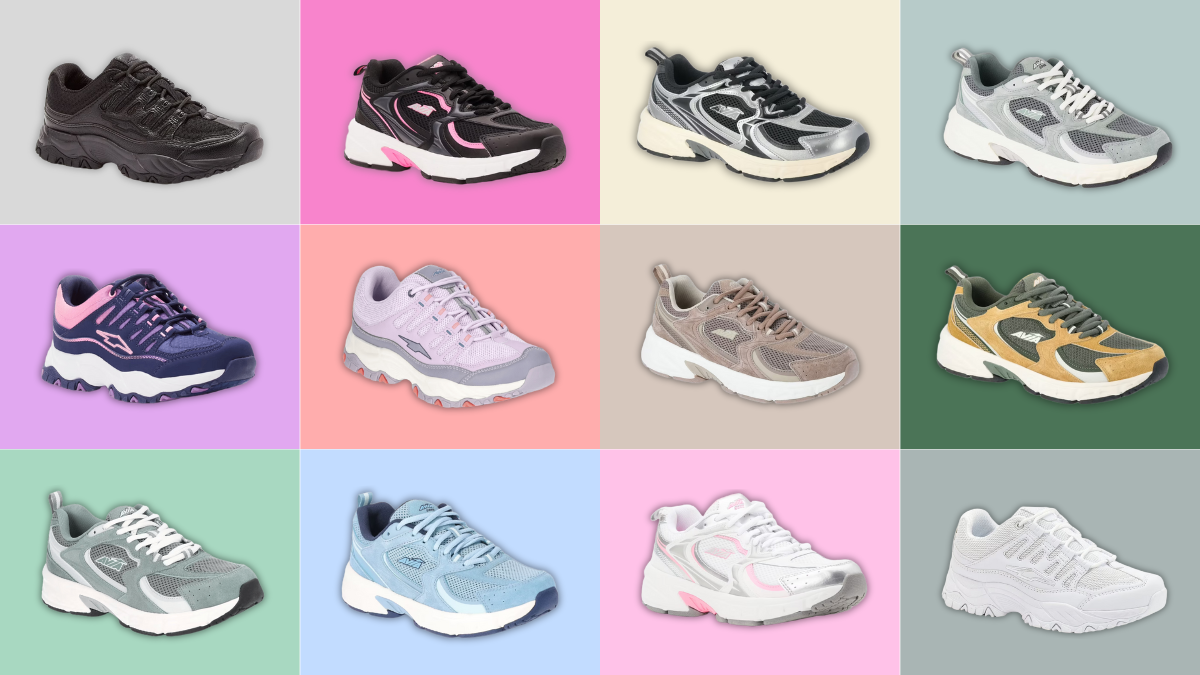
Back in July, RaKai enthusiastically unboxed a pair of Avia Men’s 5000 Athletic Performance Running Shoes during a broadcast (viewable here). Following the now-viral reaction, the streamer’s young audience flocked to the brand in droves. In an unforeseen move, Avia was at the top of back-to-school clothing wishlists. As with most trends, the sudden interest in Avias was predicted to dip around the winter months. Surprisingly, multiple color waves of the three most popular Avias (Avia Men’s 5000 Athletic Performance Running Shoes, Avia Women’s Elevate Athletic Sneakers, and Avia Women’s 5000 Performance Sneakers) are still sold out. What’s even odder is that these sneakers aren’t sitting on the resale market, being feverishly bid on. Instead, Avias are actually being worn by a new type of collector entering the scene – the frugal fashionista.
No stranger to a viral moment, Jazzy Rae made it clear that this trend is still too niche to solidify that Avia has shifted sneaker culture in a measurable way.
“I guess it depends on what they continue to drop because they have a stylish shoe at a great price point that’s accessible at Walmart,” Jazzy Rae said sternly. “And so I think [Avia] will continue to be a thing as long as they continue to produce great designs and comfortable shoes… but do I think the sneaker girlies are going to start doing [Avia] unboxings? No. I don’t think [we’re] going to see a crossover.”
Yet, Jazzy Rae still believes there is room for everyone.
“Online shopping has made [sneaker collecting more] accessible,” argued Jazzy Rae. “With more people participating, [there is] more interest. So, you’re going to see the price go up. More people, more brands, more collabs, more people participating in sneaker culture.”
She added, “I always said, ‘Sneakers were the great connector.’ Everybody wears sneakers, no matter your profession.”
Jazzy Rae pointed out that this wasn’t always the case, citing instances in which women collectors were bullied or treated as “fringe” outliers. Still, the designation of “sneaker head” has only been reserved for the crème de la crème of collectors. Although securing a great deal and budget buys have always been common in other sectors of fashion, in sneaker collecting, it feels as if the opposite is true.
Notable sneaker heads often brag about their collection’s exorbitant estimated value. On the outside looking in, novices were given the impression that to be bestowed with the title “sneaker head,” you must shell out tens of thousands while simultaneously accepting mistreatment from brands, citing bloated pricing, unsuccessful raffles, and hoarded inventory as just the tip of the iceberg. To push back, novices are rejecting the collectors’ creed, committing only to trend proximity and cost efficiency. If the shoes are stylish, affordable, and available, they are fair game.
Upon first glance, Avia’s footwear line, Shaqs, or even Stephon Marbury’s now-defunct Starbury Ones (formerly released as part of Steve & Barry’s University Sportswear) share a number of similarities – big retailer backing, an accessible price point, and a familiar design. Still, Avias has managed to avoid what the others couldn’t – the “made for poor people” stigma. No brand is immune to the elitist label.
Team Jordans have been dubbed “Mexican Jordans,” a slang term used to grossly oversimplify the Latin community’s push for the designs because of their lower price point. The Shaq and Starbury brands desperately tried to convert sneaker heads. Why buy Jordans when you can buy Shaqs? This line of questioning does not work on someone who is enamored with the social capital the former provides. Avia, on the other hand, has no desire to catch the eye of traditional sneaker heads because its wearers are much more aligned with dupe bandits.
Avia lifts numerous elements from both New Balance and Balenciaga. Hardcore sneaker heads would immediately recognize the similarities and back away. Novices either are unaware of this overlap or simply don’t care. In retaliation for the imposed tariffs, Chinese factory owners on TikTok claimed that dozens of high-end luxury brands were manufactured within their walls. Shortly after these allegations, lifestyle content creators began purchasing dupes from these vendors and others on platforms such as DHGate, and this shunned practice has trickled into the novice collector cohort.
Jazzy Rae drew a hard line in the sand, immediately rejecting the idea of intentionally purchasing dupes. But she admitted that not everyone feels as strong as she does.
“Young kids think it is [okay],” Jazzy Rae admitted. “I mean, [even] today’s [general] consumer thinks it is. I did not grow up thinking it was. I [just] couldn’t do it, and my kid couldn’t do it, but my kid’s best friend does it.”
She continued: “Hardcore sneaker heads that respect the design story, they’re not going to like that.”
Avias is moving units in-store and online. Its affordable price point, accessibility at Walmart stores, and the country’s current economic recession make it the prime footwear to take over. However, like Jazzy Rae and other sneaker heads alike, perceive it to be a mere flash in the pan.
“The hype driven consumer is not going to shop at Walmart for the sneakers,” closed Jazzy Rae. “I would think like Virgil [Abloh] would have had to drop something there, or maybe Kanye [West], a few years ago. But [Avia buyers are] an everyday consumer or like the fringe sneaker [shopper], I wouldn’t [liken them to a] sneaker head, sneaker lover, or sneaker enthusiast, [just a] consumer.”